
Simulations & Virtual Labs
Change one thing.
Watch the system answer.
Manipulate a variable, test a prediction and interpret what follows. Simulations and virtual labs make relationships available for repeated, deliberate investigation.
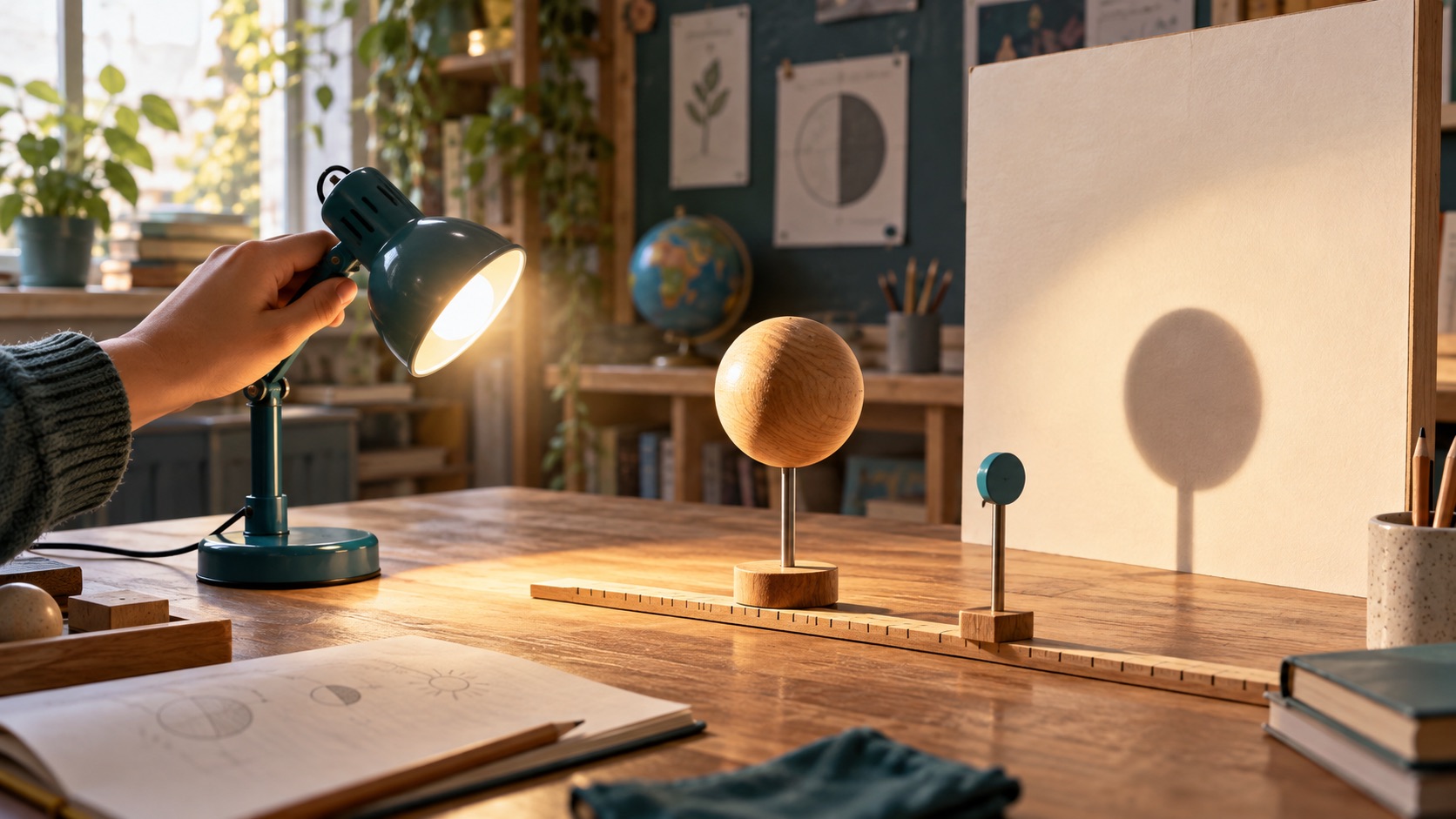
Begin with a testable prediction.
Learners state what they expect and why before moving a control or starting a trial.
Change deliberately.
One controlled variable and repeatable trials make the relationship easier to inspect than a trail of unplanned clicks.
Treat the model as a model.
Results invite explanation, comparison with the real world and a new case; they do not prove more than the simulation represents.
FROM OBJECTIVE TO EXPERIENCE
Different subjects.
Purposeful possibilities.
Start with what learners should understand. Shape the experience around the thinking you want to see.
Light, Object, Shadow
Move a light source while holding the screen and object still, record shadow size and test whether the first pattern survives a new distance.
Explain how source distance affects shadow size using controlled observations.
A Pond Out of Balance
Change one population in a simplified pond, follow direct and indirect effects and compare the outcome with the original prediction.
Trace relationships in a food web while naming the limits of the model.
Keep the Cup Warm
Compare insulating materials over equal time intervals, repeat an uncertain trial and select a material for a different container.
Interpret temperature-change data and apply the result under new constraints.
INSIDE A LEARNING MOMENT
Move the light, explain the shadow.
A controlled light-and-shadow investigation turns a visual change into a prediction, a measurement and a model-based explanation.
How does moving a light source change the size of an object's shadow?
State the prediction
Place the light, object and screen at starting positions. Predict what will happen when only the light moves closer and explain why.
Run a controlled set
Keep object and screen fixed, test three source distances and record shadow width after each deliberate change.
Inspect the pattern
Compare the measurements with the prediction. Repeat an outlying trial and use the light rays in the model to explain the relationship.
Transfer to a new arrangement
Predict a shadow for a larger object at an unfamiliar position, then explain which parts of the earlier pattern still apply.
The teacher reviews the design, records and explanation together, then decides whether the evidence supports extension or another physical observation.
MAKE THINKING VISIBLE
Notice the reasoning.
Choose what comes next.
Use the response, the process, and the help involved to decide what a learner needs next. Educator judgment stays central.
Prediction and trial design
The expected result, stated reason and chosen constant variables show whether the learner understands what makes a fair comparison.
Measurements and revisions
Trial records, repeats and changed explanations reveal how the learner responds to results rather than simply reaching an end state.
Model-based transfer
A new arrangement checks whether the learner can use the relationship while recognising that a simulation simplifies reality.
EDUCATOR CONTROL
Your objective.
Your teaching decisions.
Create, adapt, review, and assign with the learning conditions in view.
Approve the variables and model
Choose the objective, available controls, realistic ranges and assumptions. Make simplifications and illustrative data explicit.
Require an investigation trail
Set the prediction, number of trials, measurements and explanation expected before a result counts as useful evidence.
Make every control operable
Provide keyboard input, labelled values, non-colour cues, reduced motion and a table view of changing results.
Separate support from discovery
Choose hints, variable locks and worked setup help. Record their use, and reserve a fresh trial for checking independent application.
Simulations & Virtual Labs
Let learners test the relationship.
Keep the model open to question.