
Curriculum Worlds
A familiar world.
A new question.
Return to a city, a research station or a history case. Familiar places connect the learning, while every new experience keeps its own objective, evidence and teacher-chosen next step.
 THE LEARNING CONTINUES
One city.
More to discover.
Keep a thread between lessons.
Recurring places, characters and vocabulary help learners connect a new question with something they have already explored.
Give every stop a purpose.
Each experience links a curriculum objective to an activity, useful feedback and evidence the teacher can review.
Keep the learning open.
Offer the same essential learning through a neutral route. Missing a chapter or disliking its story must not close the path.
IDEAS TO STEP INTO
A place to return to.
A reason to look again.
Explore three world designs. Each begins with a specific investigation and leaves room for connected lessons chosen by the teacher.
 01
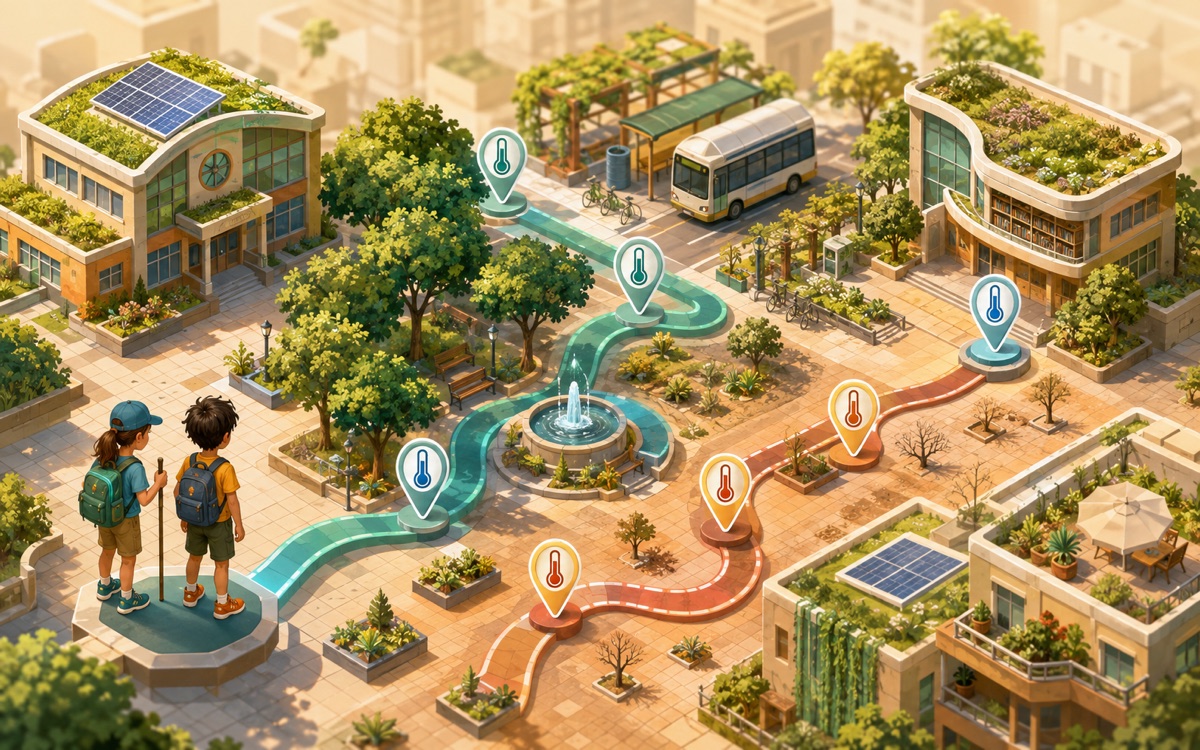
01Sustainable City: The Cool Route
Plan a comfortable walking route using supplied temperature readings, shade and distance. Later investigations can connect water, materials and the reasons behind a design.
Interpret measurements and justify a choice with evidence.
 02
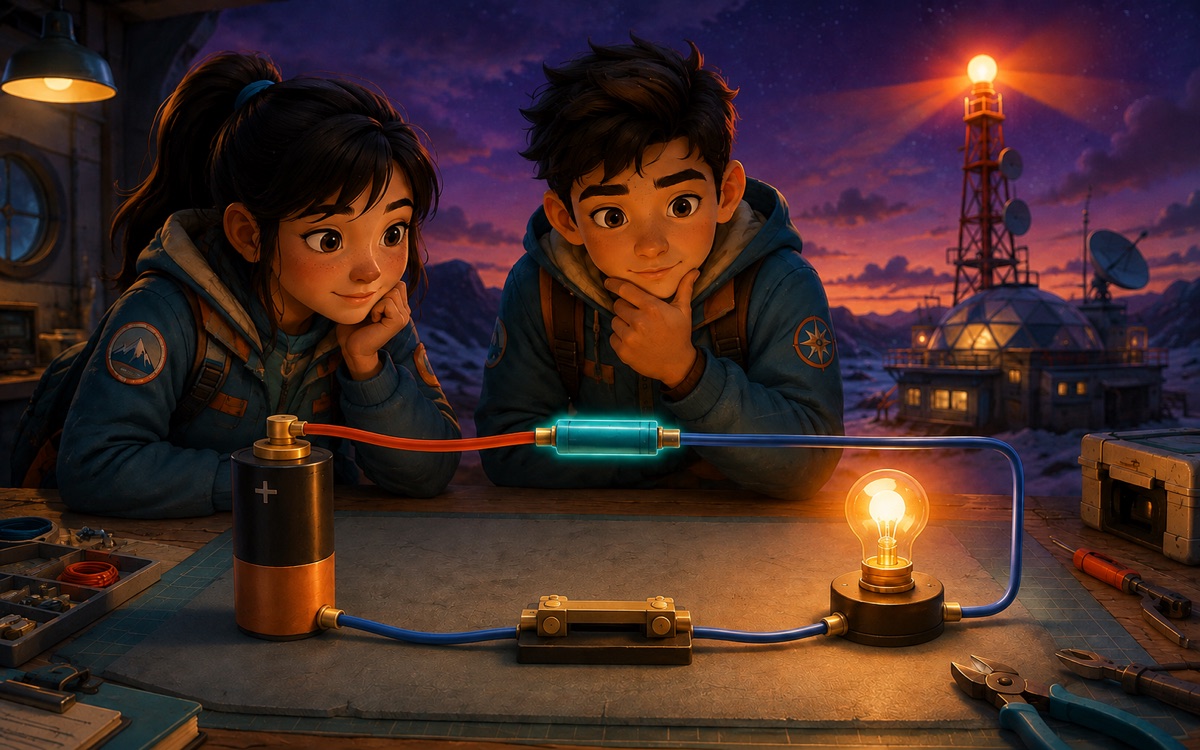
02Science Rescue Crew: Signal Lost
A research station loses its beacon. Find the break in a circuit and explain a repair before the crew explores its next question about materials, sound or light.
Explain a complete conducting path and investigate an open circuit.
 03
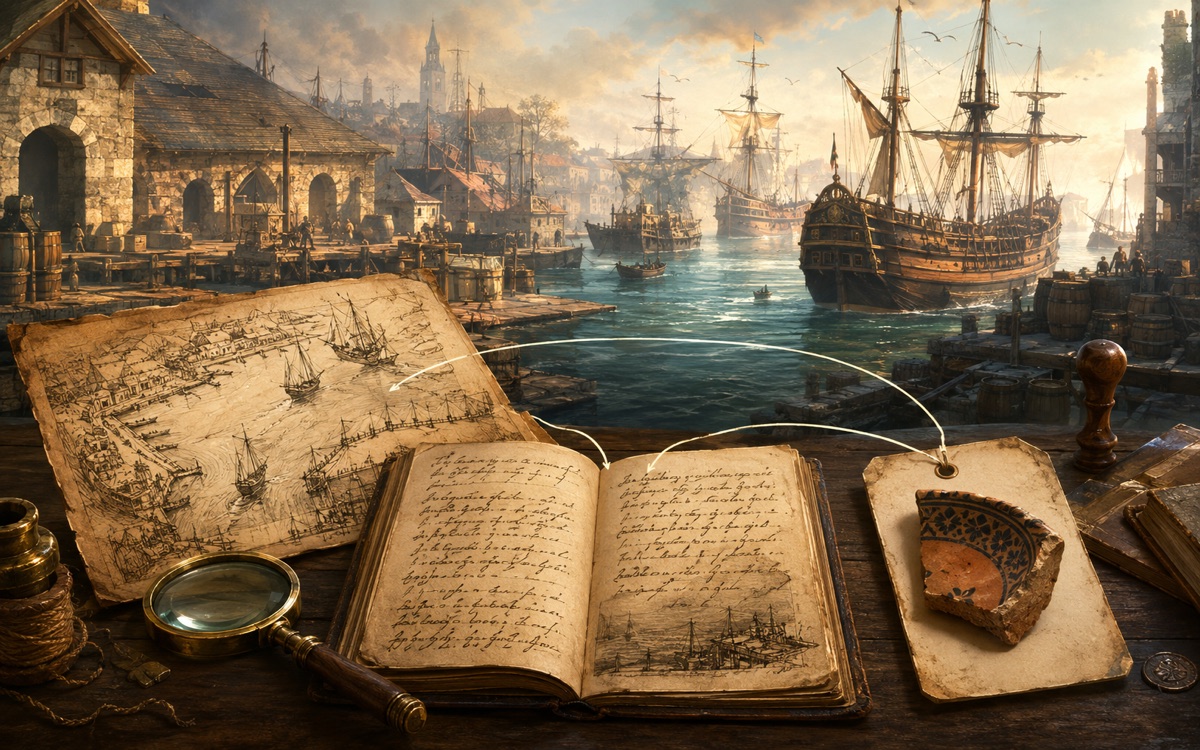
03Historical Time Agency: The Harbour File
Use maps, accounts and object records to investigate a harbour. Support a claim, name an uncertainty and treat reconstructions as interpretations rather than primary evidence.
Distinguish historical evidence from inference and explain a source's limits.
Illustrative experience concepts. Open each learning design for its objective, evidence and available demo.
INSIDE A LEARNING MOMENT
Three connected stops.One city worth thinking about.
This guided Sustainable City illustration proposes three connected stops, with a clear learning objective at each.
- 1Frame a comparison
Plan a temperature comparison between shaded and exposed parts of the square. Identify the observations needed to judge a cooler route.
- 2Follow the water
Plan how to compare runoff over paving and planted ground. Consider where water can flow or soak in.
- 3Make the case
Bring the shade and runoff questions into a proposed square design. Explain the choices and evidence needed; use teacher feedback to plan the next investigation.
One world. Connected discoveries.
Find the cool route
Compare shaded and unshaded measurements. Use the same time and conditions before recommending a route.
A route choice, a data point and a reason.
Every stop remains accessible. The story is a choice; the learning stays.
Guided illustration · Responses stay on this page
MAKE UNDERSTANDING VISIBLE
Carry the context forward.
Look at each new idea.
Progress through a story and understanding a subject tell different parts of the learner's journey.
Evidence at each stop
Connect a reading, prediction or decision with the objective of that experience.
Reasons that connect
Look at how learners use earlier observations to support a later choice, including what they revise after feedback.
A new task in context
Check a fresh application and the support used. Story completion alone does not establish independent understanding.
A useful next step comes from the objective, the evidence and the support used. A finished activity alone does not establish mastery.
EDUCATOR-CONTROLLED
You guide the curriculum.
The world gives it continuity.
Choose what connects, what stands alone and how learners can join the next experience.
Explore TutorCentrix StudioMap the learning goals
Choose the sequence and prerequisites. Keep each chapter's objective and evidence visible on the learning map.
Review each new chapter
Check facts, sources and model assumptions. Label illustrative data; generated material stays Draft until reviewed.
Keep more than one route open
Use an experience without its narrative wrapper. Provide a way into essential learning after a missed session or a change of theme.
Interpret progress thoughtfully
Recognise a reasoned decision, revision or contribution. Review understanding before choosing the next learning step.
TURN CURRICULUM INTO EXPERIENCES
Build a place to return to.Keep opening new questions.
See the full experience collectionThe one-minute film: visual story
A place to return to
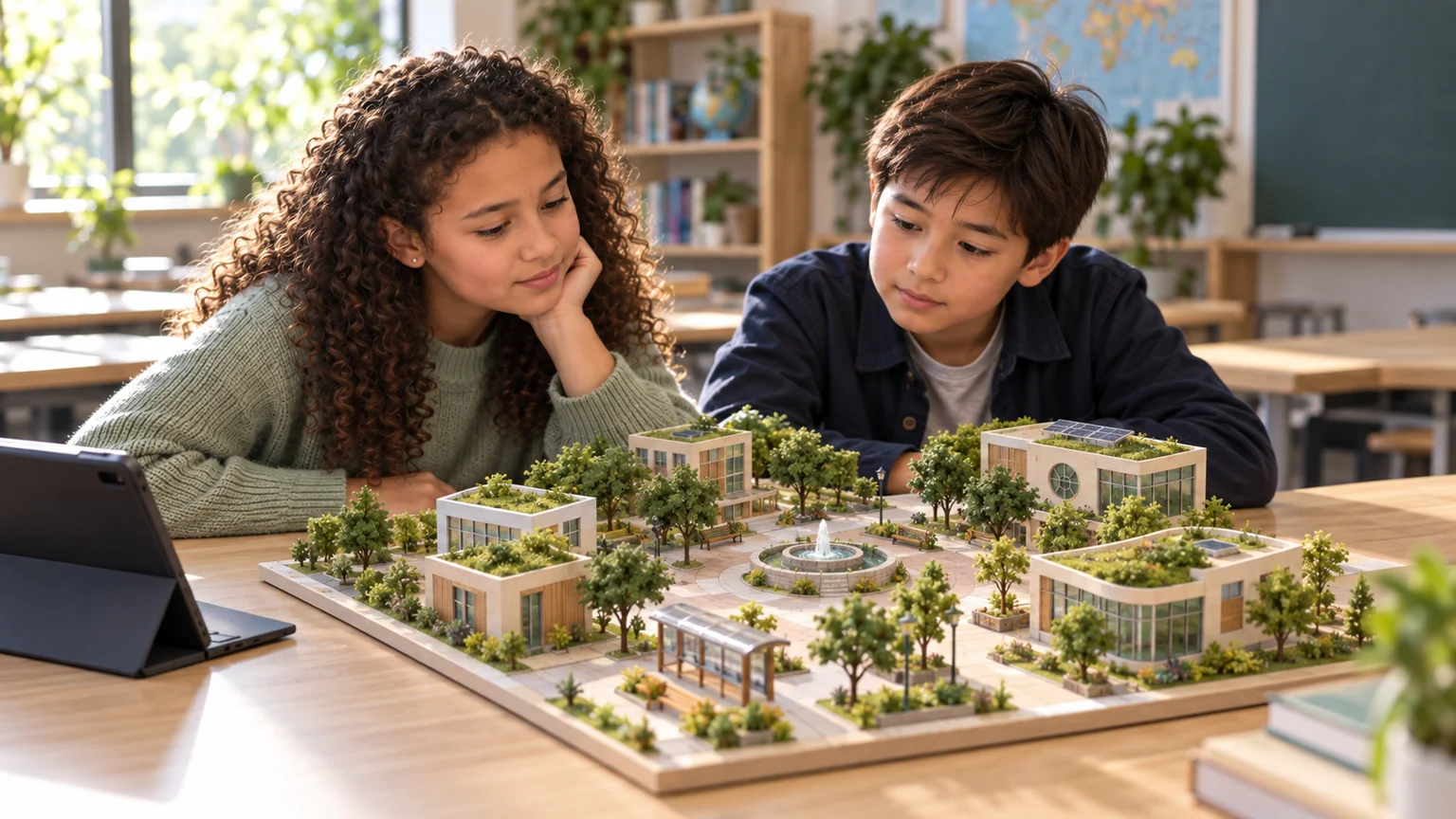
Learners inspect a tabletop Sustainable City. Its buildings, square and tree-lined paths provide a shared setting for the questions that follow.
Connected learning goals
The map connects three objectives: read data, compare resources and justify a design. The teacher reviews the learning sequence.
Use evidence to choose a route
Learners explore the city on a tablet. Explicitly illustrative readings show route A at 28°C and 200 metres, route B at 24°C and 240 metres. B is cooler but longer; this plan allows the longer walk.
A proposal has trade-offs
Learners position a canopy in the model. A canopy can provide shade now and needs materials; trees grow over time and need water. The choice needs a reason suited to its context.
Show the reason for the design
A learner connects a sketch with the city. The evidence view relates the route choice, proposal and explanation to their learning objectives.
The story is a choice
A neutral learning map keeps the same three objectives and access. Story completion is not treated as mastery. The teacher chooses the next question.
A familiar world, a new question
The teacher and learners review their model and proposal together before the TutorCentrix closing message. There is no speech, only instrumental music.
Generated fictional classroom scenes and original instrumental music. Product screens illustrate the intended learning workflow. There is no speech.